
Africa
Chad
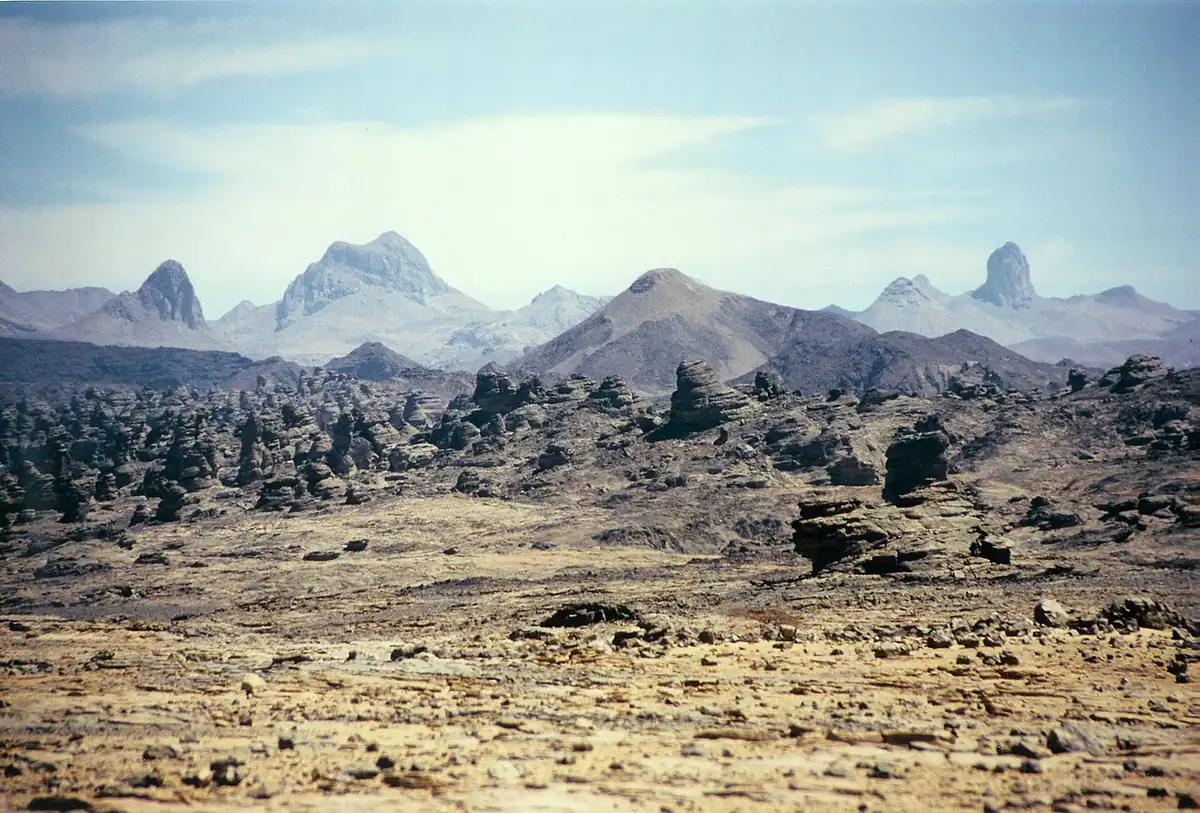
Sahara dunes, Lake Chad, and Sahel markets
Photo: michael kerling, Public domain · via Wikimedia Commons
Capital
N'Djamena
Languages
French, Arabic, and many local languages
Currency
Central African CFA franc (XAF)
Plugs and power
Types C, D, E, F · 220 V
Drives on the
Right
Time zone
UTC+1, no daylight saving
The short version
What to expect in Chad
Chad sits in the middle of the continent, with Saharan desert in the north, Sahel grassland in the center, and wetter savanna in the south. Its landscapes include the Ennedi plateau, with sandstone arches and rock art, and the shrinking shores of Lake Chad. Daily life centers on markets, herding, and farming. Check current government travel advice before planning any trip, as large areas are restricted.
- Ennedi rock formations
- Lake Chad
- Zakouma National Park
- Sahara desert landscapes
Did you know?
Lake Chad has shrunk dramatically since the 1960s and is shared by four countries: Chad, Cameroon, Niger, and Nigeria.
Food and drink
What to eat in Chad
- 01
Daraba
Okra and meat stew, often served with millet porridge.
- 02
Boule
Thick millet or sorghum porridge eaten with sauce.
- 03
Grilled fish
Freshwater fish cooked over charcoal, common in N'Djamena.
Language
Say it like a local
French
Bonjour
Hello
Merci
Thank you
Combien ça coûte ?
How much is it?
Money and manners: Greet people properly before any request, and ask permission before photographing people or government and military buildings, which can lead to detention.
Timing
When to go
November to February is the cool, dry season, when daytime heat in the Sahel and desert is most bearable and roads are passable.
Best months: Nov–Feb
Guides
No trip guides for Chad yet
We have not written a trip guide here yet. The facts below cover entry, health and safety, and you can still plan a trip of your own in Andamos.
Safety, health and entry
Before you go
What to know about entry, health and safety before you go, summarized from official guidance for U.S. passport holders. Rules change, so confirm on the sources linked below.
Visa for U.S. citizens
Visa required in advance
Visa in advancePassport
Valid at least 6 months after arrival
Vaccines
Several vaccines recommended
State Department advisory
Do not travel
Level 4Entry and visas
Visa required in advance
A visa is required to visit Chad and is arranged before you travel through a Chadian embassy. Rules specific to U.S. passports could not be confirmed, so check with the embassy before booking.
Have ready
- Valid at least 6 months after arrival
- Apply for the visa at a Chadian embassy before you fly. Check current requirements with the embassy directly.
- If you stay more than 72 hours, you must register with the police in N'Djamena and bring a passport photo.
- Carry a yellow fever vaccination certificate. It is required if you arrive from a country with yellow fever risk.
Health and vaccines
Several vaccines recommended
Medical facilities are poor, even in N'Djamena, and hospitals are sometimes affected by strikes. Medical evacuation insurance is essential, along with funds to cover treatment.
Drinking water: Tap water is not safe to drink, so use only boiled or bottled water and avoid ice.
Required to enter
No vaccines are required for U.S. travelers arriving directly.
Recommended by the CDC
Health risks
- Malaria and other mosquito-borne diseases
- Cholera in several provinces
- Meningitis during the dry season
- Poliovirus detected in the past year
Safety
Level 4: Do not travel
Do not travel (Level 4)
The U.S. State Department advises U.S. citizens not to travel to Chad because of crime, terrorism, unrest, kidnapping, landmines and very limited health care. U.S. government help for citizens in Chad is limited.
Avoid
- The Lake Chad region, the northern provinces (Borkou, Ennedi, Tibesti), western Kanem and areas near all borders, where armed groups operate.
Watch for
- Terrorist attacks can happen without warning, including hotels, markets, airports and places of worship.
- Kidnapping risk, especially near borders and in the north and east.
- Armed robbery and carjacking, particularly after dark and outside N'Djamena.
- Avoid large gatherings and demonstrations, which can turn violent.
Local laws and customs
- Carry your passport and visa, and register with the police if staying more than 72 hours.
- Photographing government buildings, military sites and airports can lead to detention.
- Drug offenses carry severe penalties, and dress and conduct should be conservative.
Emergency numbers
- Emergency
- 17
- Police
- 17
- Ambulance
- 1212
Sources: U.S. State Department travel advisories · U.S. CDC travel health notices · UK government travel advice. Summarized in November 2026. Advisory levels and entry rules change, so confirm on the sources before you book.
Other governments: Canada, Spain (in Spanish), World Health Organization.
This is general information, not medical, legal or security advice.
Keep exploring
More in Africa
Your trip, your way.
Start from a guide or a blank page. Free on the web, with iPhone and Android apps coming soon.