
Asia
Myanmar
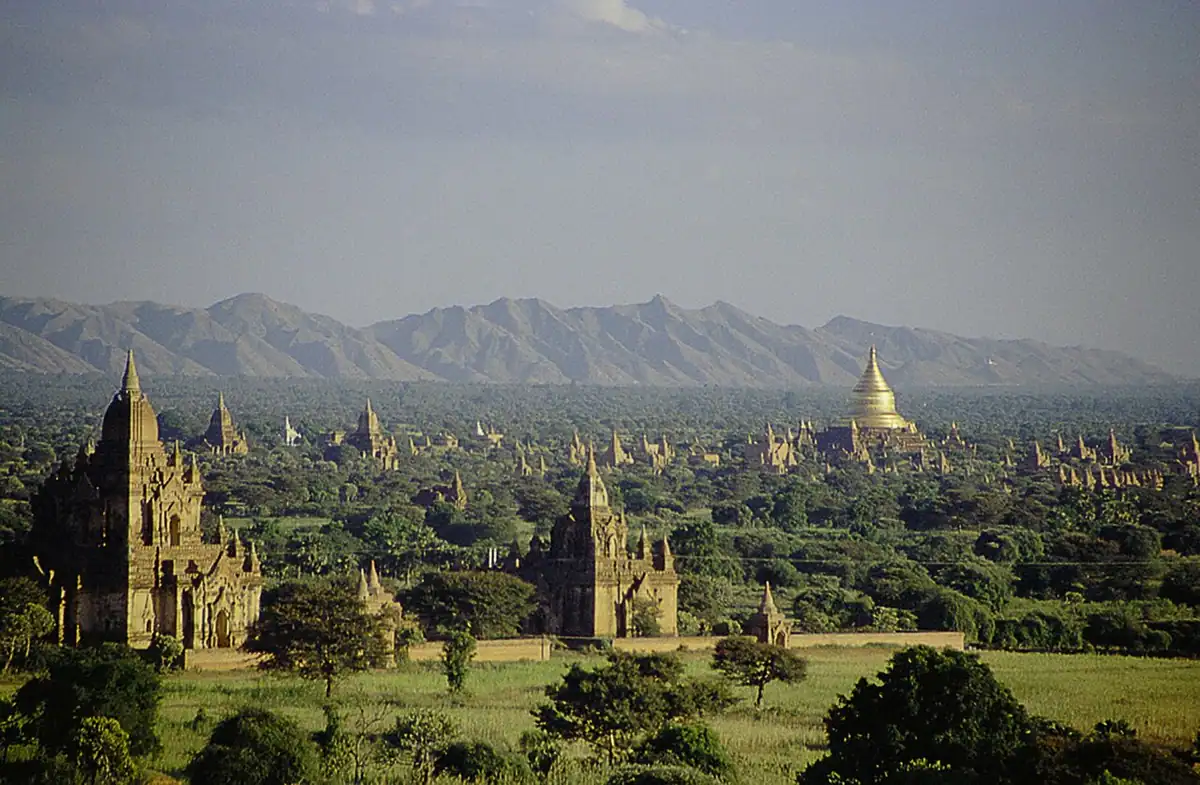
Golden pagodas, floating gardens and the Irrawaddy
Photo: Corto Maltese 1999, CC BY 2.0 · via Wikimedia Commons
Capital
Naypyidaw
Languages
Burmese and many ethnic languages
Currency
Myanmar kyat (MMK)
Plugs and power
Types C, D, F, G · 230 V
Drives on the
Right
Time zone
UTC+6:30, no daylight saving
The short version
What to expect in Myanmar
Myanmar is a Buddhist-majority country of river plains, hills and old temple cities, with the Irrawaddy as its main artery. Bagan's plain of temples, Yangon's Shwedagon Pagoda and Inle Lake's stilt villages are the best known sights. Armed conflict and political repression continue in many areas, and governments advise against travel to much of the country.
- Bagan temples
- Shwedagon Pagoda
- Inle Lake
- Irrawaddy River
Did you know?
Many people wear thanaka, a pale paste ground from tree bark, on their cheeks as sun protection and decoration.
Food and drink
What to eat in Myanmar
- 01
Mohinga
Rice noodles in fish broth, a common breakfast.
- 02
Laphet thoke
Fermented tea leaf salad with nuts, beans and garlic.
- 03
Shan noodles
Rice noodles with chicken or pork, tomato and pickles.
Language
Say it like a local
Burmese
မင်္ဂလာပါ (mingalaba)
Hello
ကျေးဇူးတင်ပါတယ် (kyay-zu tin-ba-de)
Thank you
ဟုတ်ကဲ့ (hote-kae)
Yes (polite)
Money and manners: Remove shoes and socks at pagodas and monasteries, and cover shoulders and knees. Bring clean, undamaged US dollar notes or kyat cash, as cards and ATMs can be unreliable.
Timing
When to go
November to February is cool and dry, which makes temple visits comfortable, while March to May is very hot and June to October brings monsoon rain.
Best months: Nov–Feb
Guides
No trip guides for Myanmar yet
We have not written a trip guide here yet. The facts below cover entry, health and safety, and you can still plan a trip of your own in Andamos.
Safety, health and entry
Before you go
What to know about entry, health and safety before you go, summarized from official guidance for U.S. passport holders. Rules change, so confirm on the sources linked below.
Visa for U.S. citizens
Visa required, apply online
Online visa or authorizationPassport
Valid at least 6 months after arrival
Vaccines
No vaccines required
State Department advisory
Do not travel
Level 4Entry and visas
Visa required, apply online
You need a visa before you travel, and Myanmar does not issue visas on arrival. Tourists can apply for an e-visa online. Rules for U.S. passports could not be fully confirmed, so check before booking. The State Department advises against all travel.
Have ready
- Valid at least 6 months after arrival
- Apply for the tourist e-visa online and carry a printed copy; business e-visas need sponsorship by a registered Myanmar company.
- Overstaying a visa can bring fines or detention, so keep to your permitted dates.
- Myanmar does not recognize dual nationality, which can limit consular help if you are detained.
Health and vaccines
No vaccines required
Health infrastructure is poor and hospitals are strained by the conflict. Carry travel health insurance that covers medical evacuation, though evacuation may itself be hard to arrange.
Drinking water: Do not drink tap water; use bottled or purified water and avoid ice from unknown sources.
Required to enter
No vaccines are required for U.S. travelers arriving directly.
Recommended by the CDC
Health risks
- Dengue and malaria from mosquito bites
- Hepatitis and other illness from food and water
- Schistosomiasis in river water
Safety
Level 4: Do not travel
Level 4: Do not travel
The State Department says do not travel to Myanmar for any reason, citing armed conflict, civil unrest, arbitrary detention, landmines, crime and poor health infrastructure. Fighting continues across much of the country since the 2021 military takeover.
Avoid
- The whole country, especially opposition-controlled areas, border conflict zones and sites with political or military ties
Watch for
- Bomb and arson attacks in Yangon and Nay Pyi Taw, including on hotels and businesses linked to the military
- Airstrikes and shelling, and landmines and unexploded ordnance in conflict areas
- Scam centers in eastern border areas, spreading to Yangon and Mandalay
- Flash floods and landslides in the May to October monsoon, and extreme heat from March to May
Local laws and customs
- Foreigners can be detained without a clear legal process; the military government restricts speech and gatherings.
- Do not photograph military sites, checkpoints or security forces, and avoid political activity online or in person.
- Drug offenses carry severe penalties, and there are curfews in some areas.
Emergency numbers
- Emergency
- 199
- Police
- 199
- Ambulance
- 192
- Fire
- 191
Sources: U.S. State Department travel advisories · U.S. CDC travel health notices · UK government travel advice. Summarized in November 2026. Advisory levels and entry rules change, so confirm on the sources before you book.
Other governments: Canada, Spain (in Spanish), World Health Organization.
This is general information, not medical, legal or security advice.
Keep exploring
More in Asia

Your trip, your way.
Start from a guide or a blank page. Free on the web, with iPhone and Android apps coming soon.