
Oceania
Micronesia
Four island states, stone money and sunken ships
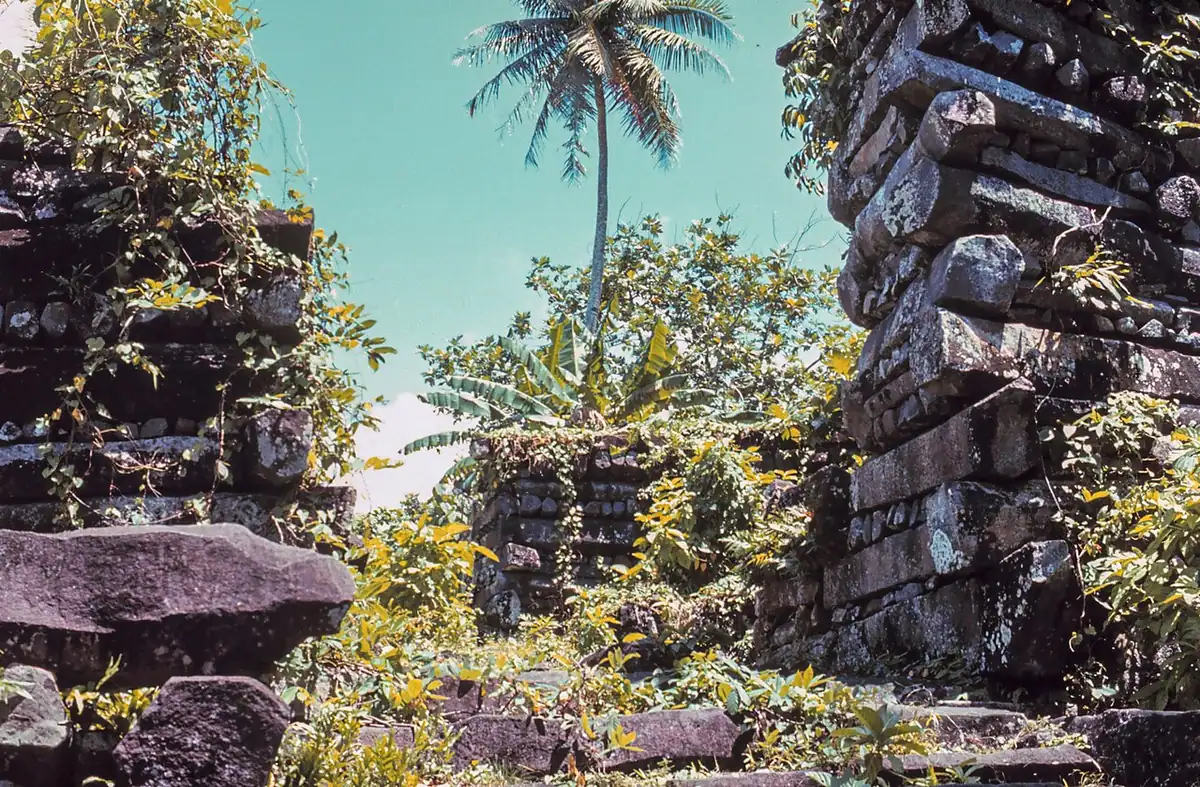
Photo: NOAA, Public domain · via Wikimedia Commons
Capital
Palikir
Languages
English, Chuukese, Pohnpeian, Yapese, Kosraean
Currency
US dollar (USD)
Plugs and power
Types A, B · 120 V
Drives on the
Right
Time zone
UTC+10 (Chuuk, Yap) and UTC+11 (Pohnpei, Kosrae), no daylight saving
The short version
What to expect in Micronesia
The Federated States of Micronesia are four island states, Yap, Chuuk, Pohnpei and Kosrae, spread across the western Pacific. Visitors come for wreck diving in Chuuk Lagoon, the ruins of Nan Madol on Pohnpei and traditional culture on Yap. Flights are infrequent and facilities simple, so plan well ahead.
- Chuuk Lagoon wrecks
- Nan Madol ruins
- Yap stone money
- Kosrae rainforest
Did you know?
On Yap, large stone discs called rai were used as money, and some stand in village stone-money banks still recognized as owned.
Food and drink
What to eat in Micronesia
- 01
Sakau
Ceremonial drink from pounded roots on Pohnpei, numbing the mouth.
- 02
Breadfruit
Starchy staple roasted, boiled or fried.
- 03
Fresh tuna
Caught daily and served raw, grilled or in soups.
Language
Say it like a local
Pohnpeian
Kaselehlia
Hello
Kalangan
Thank you
Menlau
Good
Money and manners: Dress modestly in villages and away from the beach. Ask permission before photographing people or sacred sites such as Nan Madol, and carry cash, as cards are accepted in few places.
Timing
When to go
December to April is the drier stretch with calmer seas, which helps diving visibility and inter-island flights, though rain is possible year-round.
Best months: Dec–Apr
Guides
No trip guides for Micronesia yet
We have not written a trip guide here yet. The facts below cover entry, health and safety, and you can still plan a trip of your own in Andamos.
Safety, health and entry
Before you go
What to know about entry, health and safety before you go, summarized from official guidance for U.S. passport holders. Rules change, so confirm on the sources linked below.
Visa for U.S. citizens
Visa-free for U.S. citizens
Visa-freePassport
Valid 120 days beyond arrival advised
Vaccines
No vaccines required
State Department advisory
Exercise normal precautions
Level 1Entry and visas
Visa-free for U.S. citizens
U.S. citizens can enter the Federated States of Micronesia without a visa under the Compact of Free Association, but need a passport, as it is not a U.S. territory. You will fill in an immigration form on arrival and may be asked for an onward ticket.
Have ready
- Valid 120 days beyond arrival advised
- Carry your passport for domestic flights too, since you clear immigration even when flying between FSM states.
- Complete the customs, immigration and quarantine form on arrival and be ready to show a return or onward ticket.
- A departure tax of 20 USD is charged when you leave.
Health and vaccines
No vaccines required
Facilities are limited but adequate for simple care, mostly on Pohnpei, Chuuk, Yap and Kosrae. Serious cases may need air evacuation to Guam or elsewhere, so carry medical evacuation insurance.
Drinking water: Drink bottled or boiled water; tap water is not considered safe to drink in most places.
Required to enter
No vaccines are required for U.S. travelers arriving directly.
Recommended by the CDC
Health risks
- Dengue and Zika from mosquito bites
- Food and water borne illness
Safety
Level 1: Exercise normal precautions
Level 1: Exercise normal precautions
The State Department rates the Federated States of Micronesia Level 1 and calls it generally safe. Petty theft and assaults occur, with significantly higher crime in Chuuk, often linked to alcohol. Typhoon season runs May to November.
Watch for
- Higher crime in Chuuk and after dark, especially where alcohol is involved
- Sexual assault and harassment of women; avoid isolated places alone after dark
- Poor street lighting and limited roadside help, which make night driving riskier
- Dangerous currents and waves, plus typhoons and landslides, especially on Kosrae and Pohnpei
Local laws and customs
- Drug offenses carry heavy fines and long prison sentences.
- Same-sex relationships are not widely accepted; public affection may attract negative attention.
- Dress modestly and respect local customs, which are conservative.
Emergency numbers
- Emergency
- 911
Sources: U.S. State Department travel advisories · U.S. CDC travel health notices · UK government travel advice. Summarized in November 2026. Advisory levels and entry rules change, so confirm on the sources before you book.
Other governments: Canada, Spain (in Spanish), World Health Organization.
This is general information, not medical, legal or security advice.
Keep exploring
More in Oceania
Your trip, your way.
Start from a guide or a blank page. Free on the web, with iPhone and Android apps coming soon.